Wainscoting is a timeless architectural feature that enhances the aesthetic appeal of a home while providing durability and protection to walls. Originally used to insulate stone walls and prevent damage, wainscoting has evolved into a design element that adds character and sophistication to any space. After 20 years installing wainscoting across Toronto, Vaughan, Markham, Richmond Hill, Ajax, and Pickering, we’ve seen which styles fit which homes. Whether you want classic, rustic, or modern — there’s a wainscoting style that fits.
Here are six common wainscoting styles, what makes each one distinct, and where they work best.
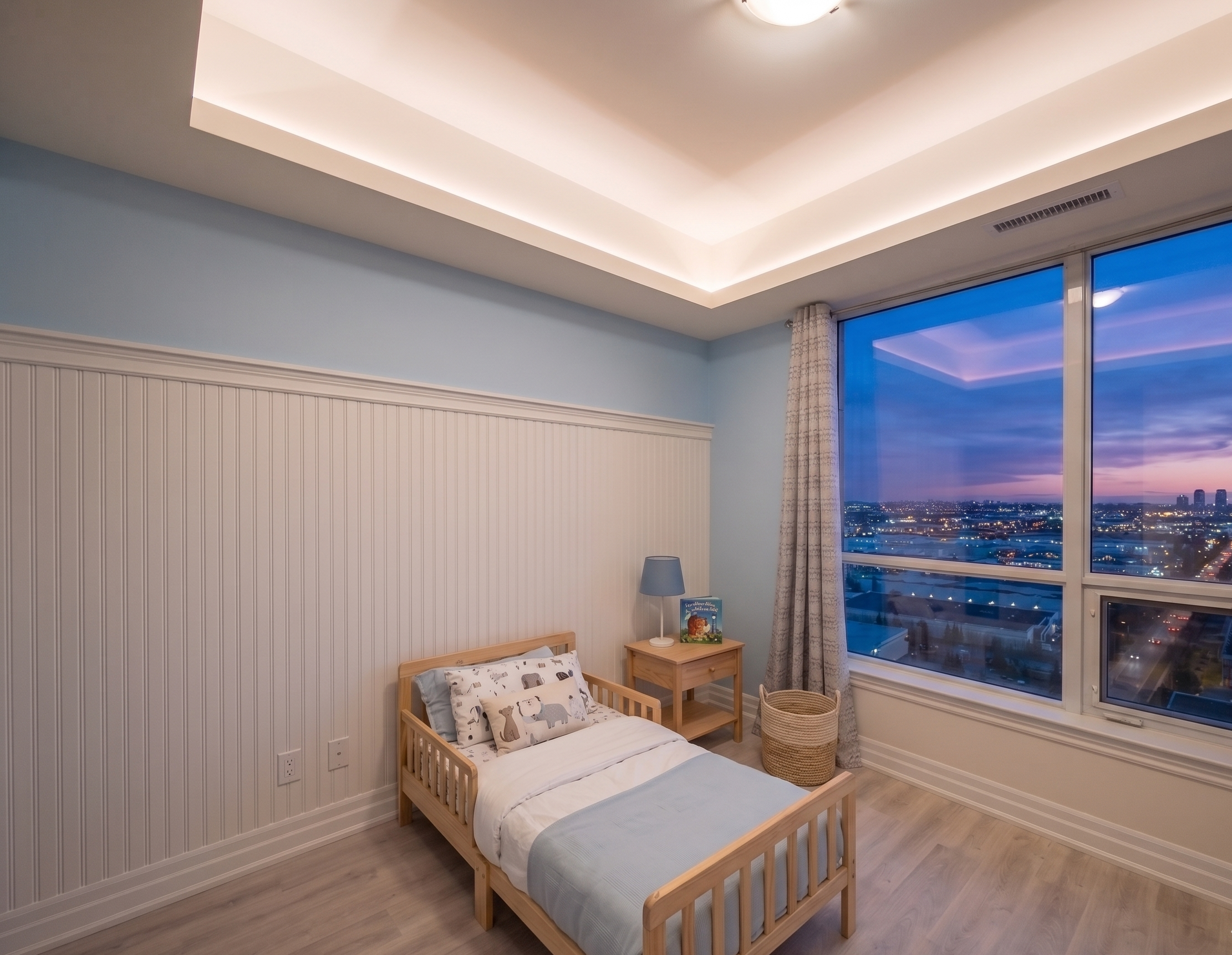
1. Beadboard wainscoting
Vertical wooden planks with grooves (or “beads”) between each board, installed in panels or individual boards joined for a uniform look. It’s one of the most casual, cottage-leaning wainscoting styles.
Where it works best — bathrooms (sealed properly, it handles humidity well and adds cottage charm), kitchens (as a backsplash or full wall in farmhouse and coastal-style kitchens), and mudrooms or entryways (durable, scuff-resistant, holds up to heavy traffic).
Styling tips:
- Paint white or soft pastels for a classic look
- For a modern twist, try navy, deep green, or charcoal
- Pair with a chair rail or cap molding for a polished finish
2. Raised panel wainscoting
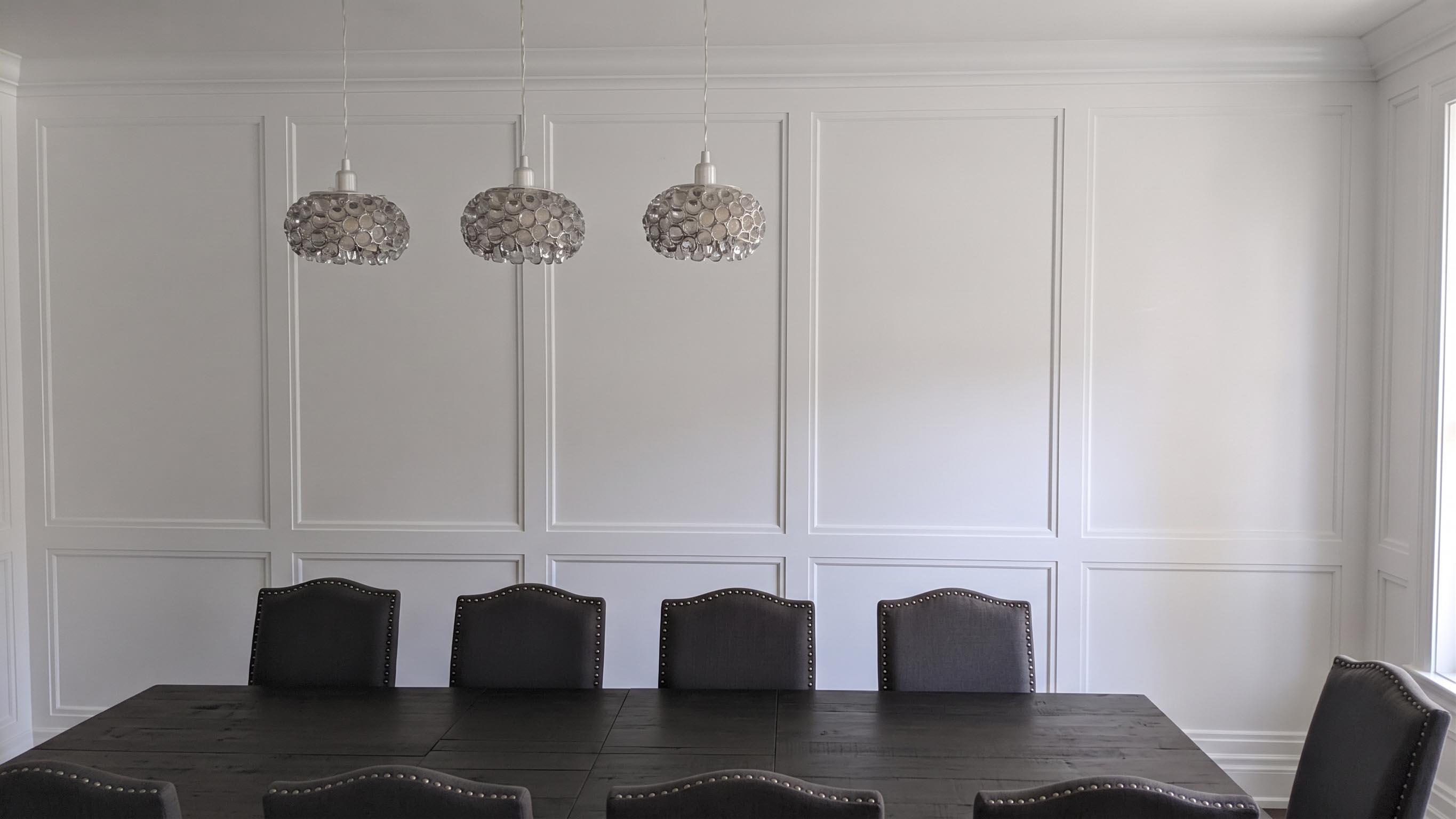
Rectangular panels with beveled or raised edges, creating a formal and elegant look. Common in historic homes, luxury spaces, and formal dining rooms.
Where it works best — dining rooms (pairs beautifully with chandeliers and traditional furniture), formal living rooms (adds depth and architectural interest), and home offices (lends a distinguished, library-like feel).
Styling tips:
- Rich, dark wood stains for traditional luxury
- Neutral or white paint for a modern-classic blend
- Wallpaper above the wainscoting adds texture and depth
3. Flat panel wainscoting (Shaker style)
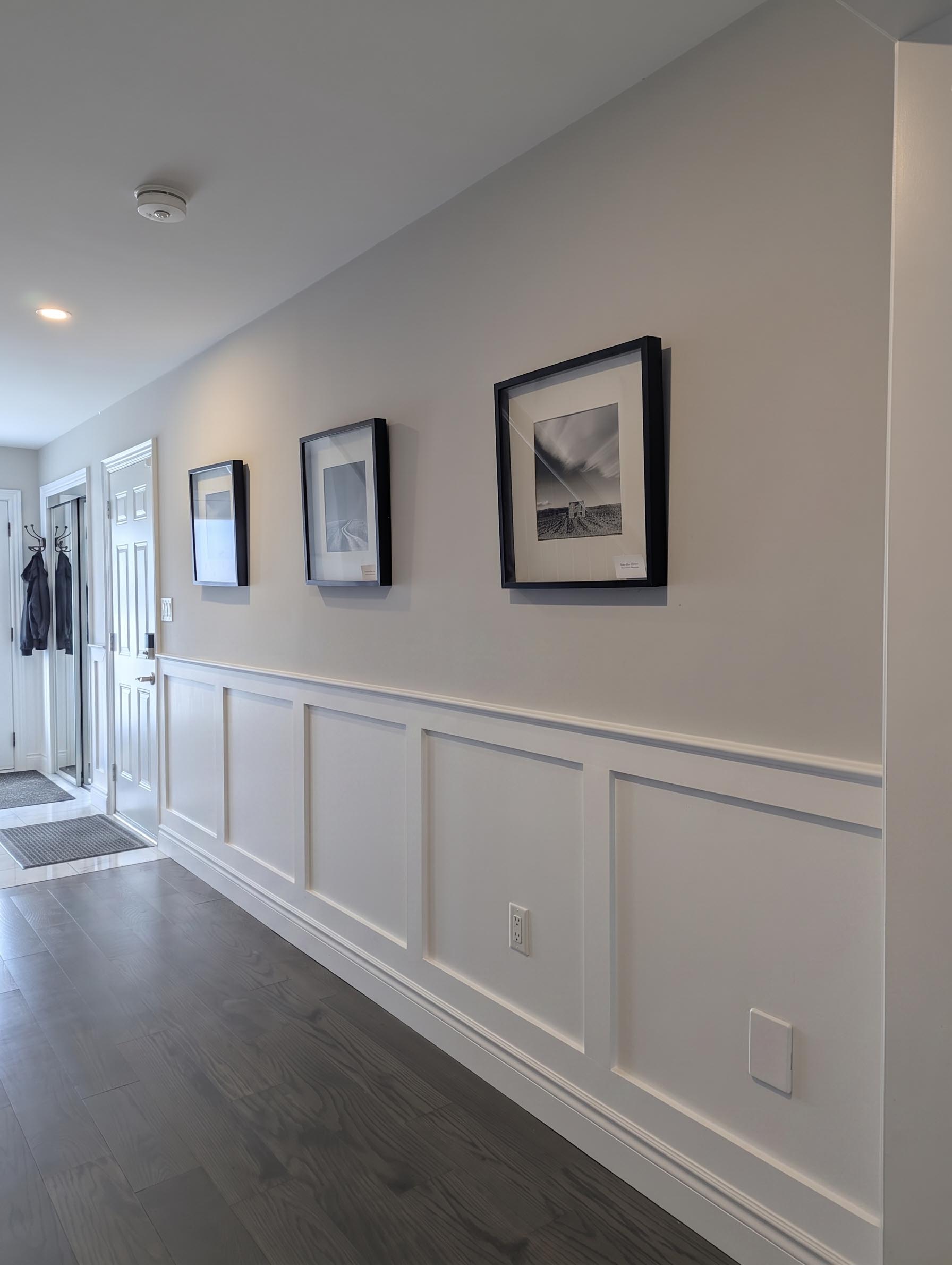
Simple, unadorned panels with clean lines — understated elegance. Ideal for contemporary and minimalist spaces where the goal is texture without ornament.
Where it works best — bedrooms (a calm backdrop for modern or transitional looks), hallways and staircases (clean lines that don’t overwhelm narrow spaces), and home libraries or studies (pairs well with built-in bookshelves for a cozy, sophisticated reading nook).
Styling tips:
- Monochromatic color scheme to emphasize the modern aesthetic
- Install up to two-thirds of the wall height for dramatic effect
- Combine with contemporary light fixtures and sleek furniture
Shaker Wainscoting on Stairs
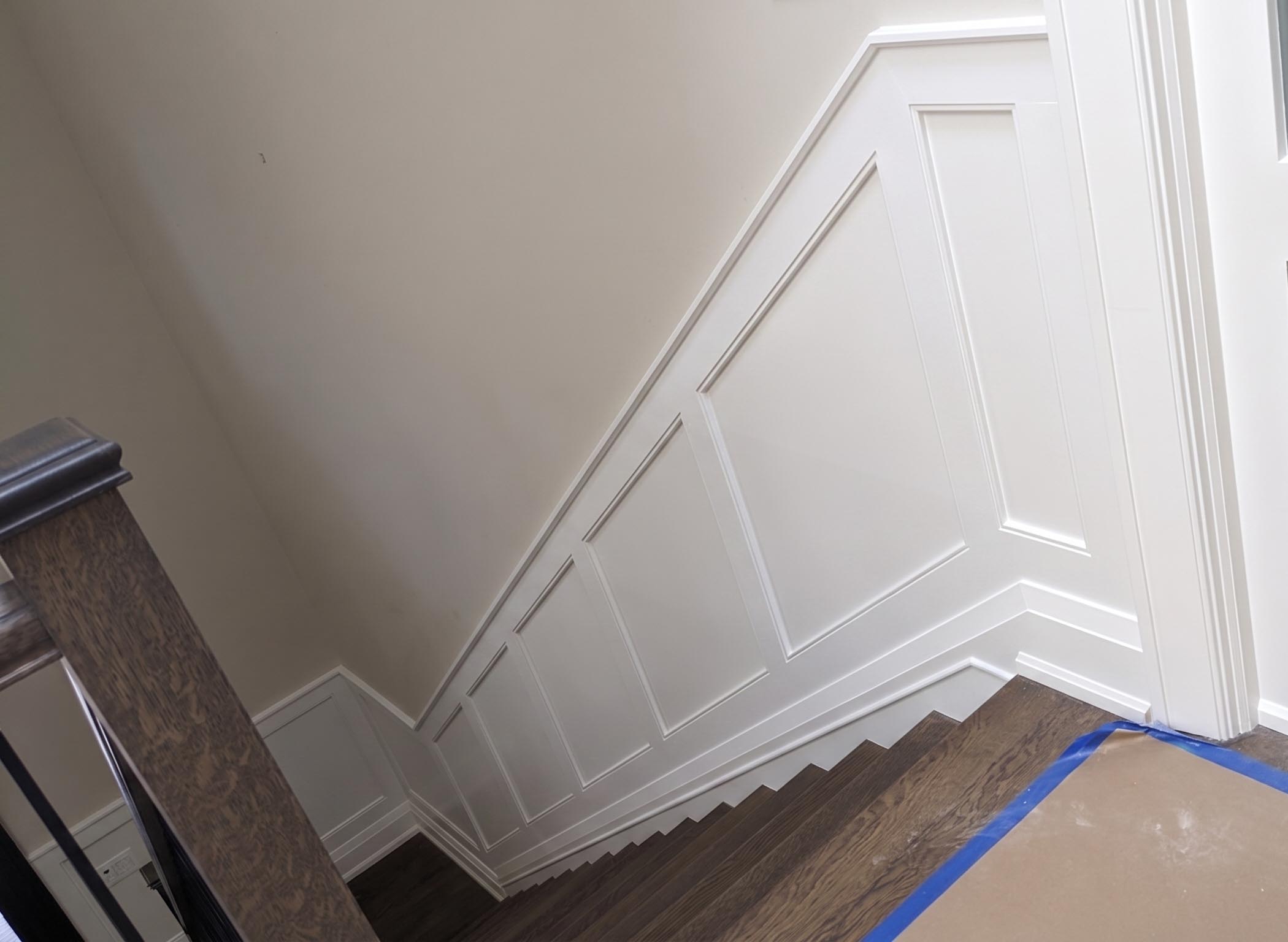
One of the most striking places to use Shaker wainscoting is the staircase. Carrying the same Shaker panelling from your main floor up the stairs and along the landing ties the whole house together, so the design reads as intentional rather than stopping abruptly where the wall turns. The staircase is also one of the most-seen walls in a home, which makes it worth finishing properly.
Wainscoting on stairs isn’t just decorative — it goes back to a practical purpose. Historically, wall finishes were far less durable and rarely perfectly even, and panelling the lower portion of the wall both protected that surface from everyday knocks and gave the room a richer, more finished feel. On a staircase, where walls take the most contact, that combination of protection and decoration still holds true today.
Built from MDF and custom-fitted on site to follow the rake of the stairs, Shaker panelling on a staircase takes more layout and cutting than a flat wall — each panel has to be measured and angled to the slope — but the result is one of the most rewarding details in the house.
4. Board and batten wainscoting
Wide vertical boards separated by thin battens (narrow strips of wood) creating a grid-like pattern. Strongly associated with farmhouse and rustic interiors, but adapts well to modern homes too.
Where it works best — foyers and entryways (welcoming, structured), nursery or kids’ rooms (vertical lines add height and remain playful when paired with bright colors), and dining rooms (a half-wall install adds texture and depth).
Styling tips:
- Natural wood or white paint for classic farmhouse
- Deep hues like charcoal or emerald green for a bold statement
- Pair with wallpaper or decorative molding above for added interest
5. Picture frame wainscoting
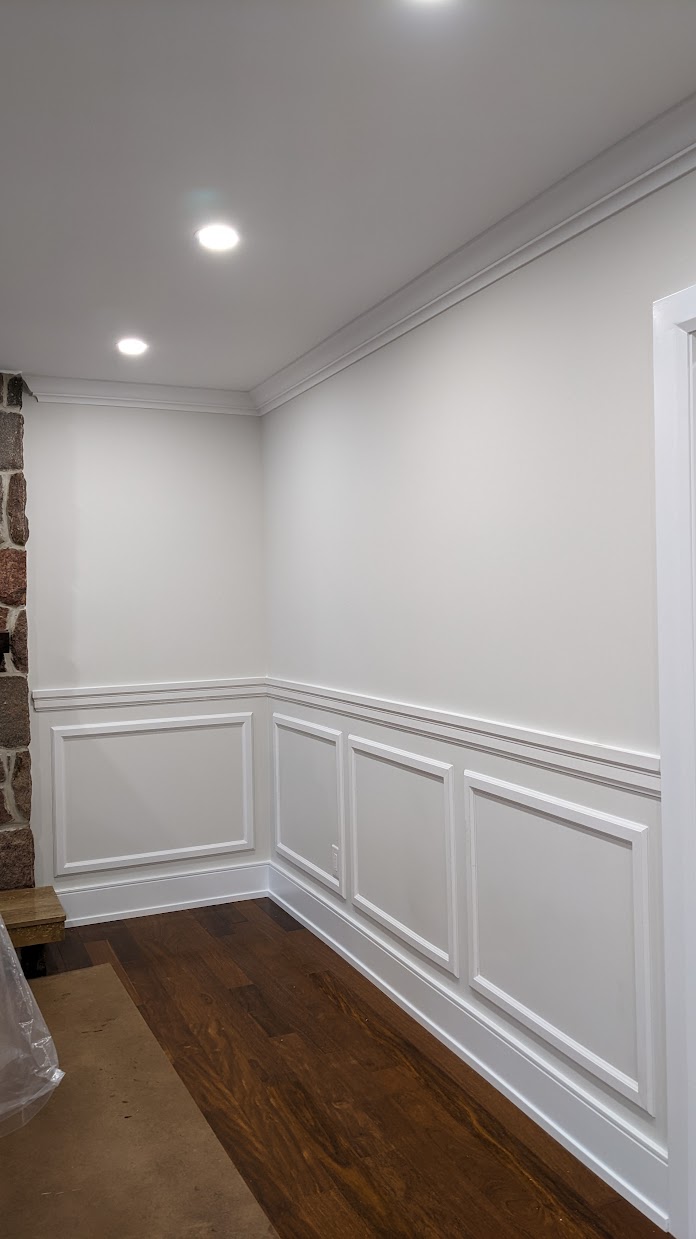
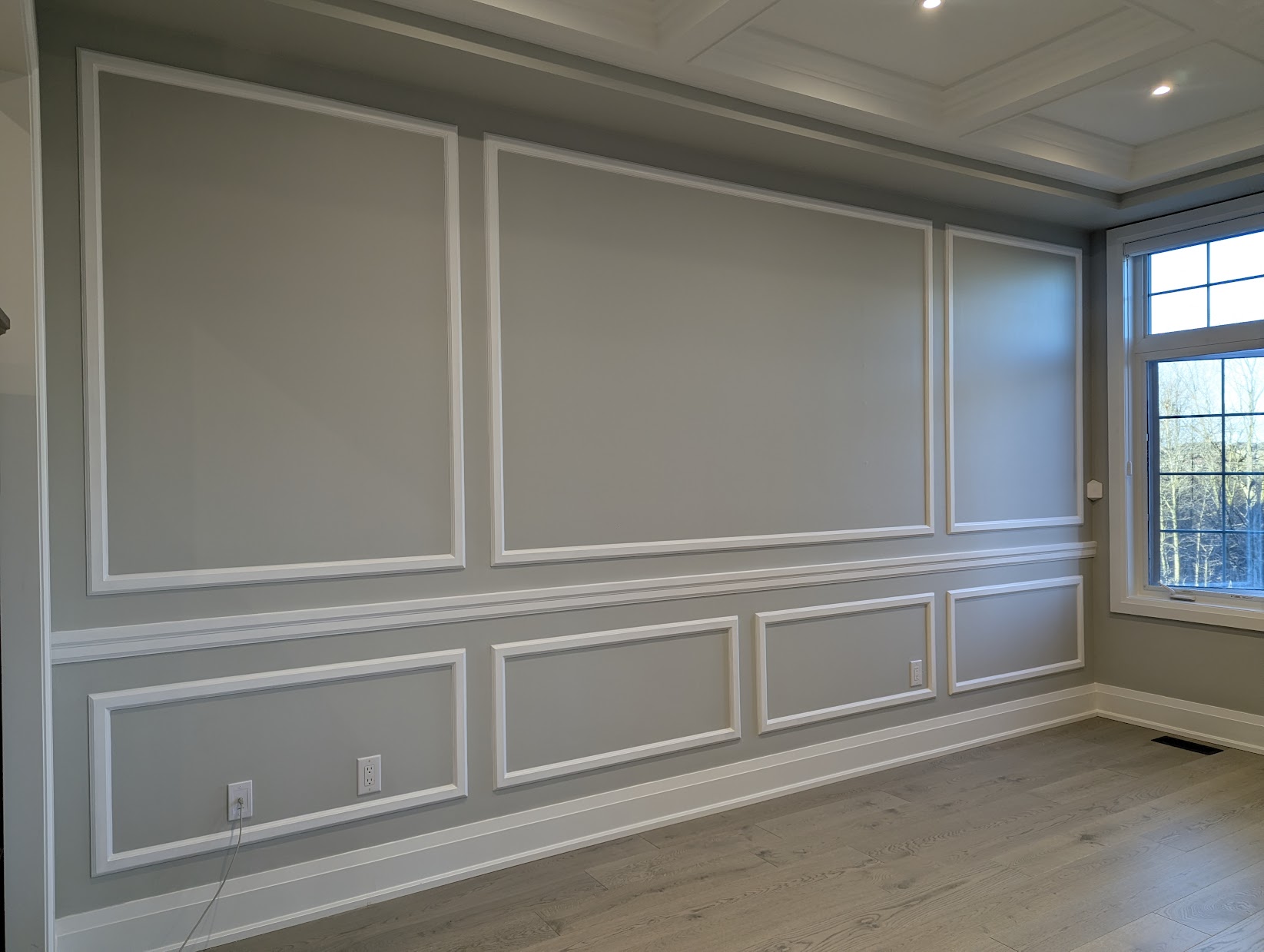
Created by adding decorative molding in rectangular shapes directly onto the wall, mimicking framed artwork. One of the most customizable styles — frame sizes and layouts can be tailored to the room.
Where it works best — living rooms (adds luxury and refinement), hallways (architectural detail without overpowering a narrow space), and master bedrooms (behind the bed creates a stunning feature wall).
Styling tips:
- Paint the molding and wall the same color for a subtle, seamless effect
- For drama, contrast the frame color with the wall
- Wallpaper or fabric inside the frames creates a unique focal point
6. Shiplap wainscoting
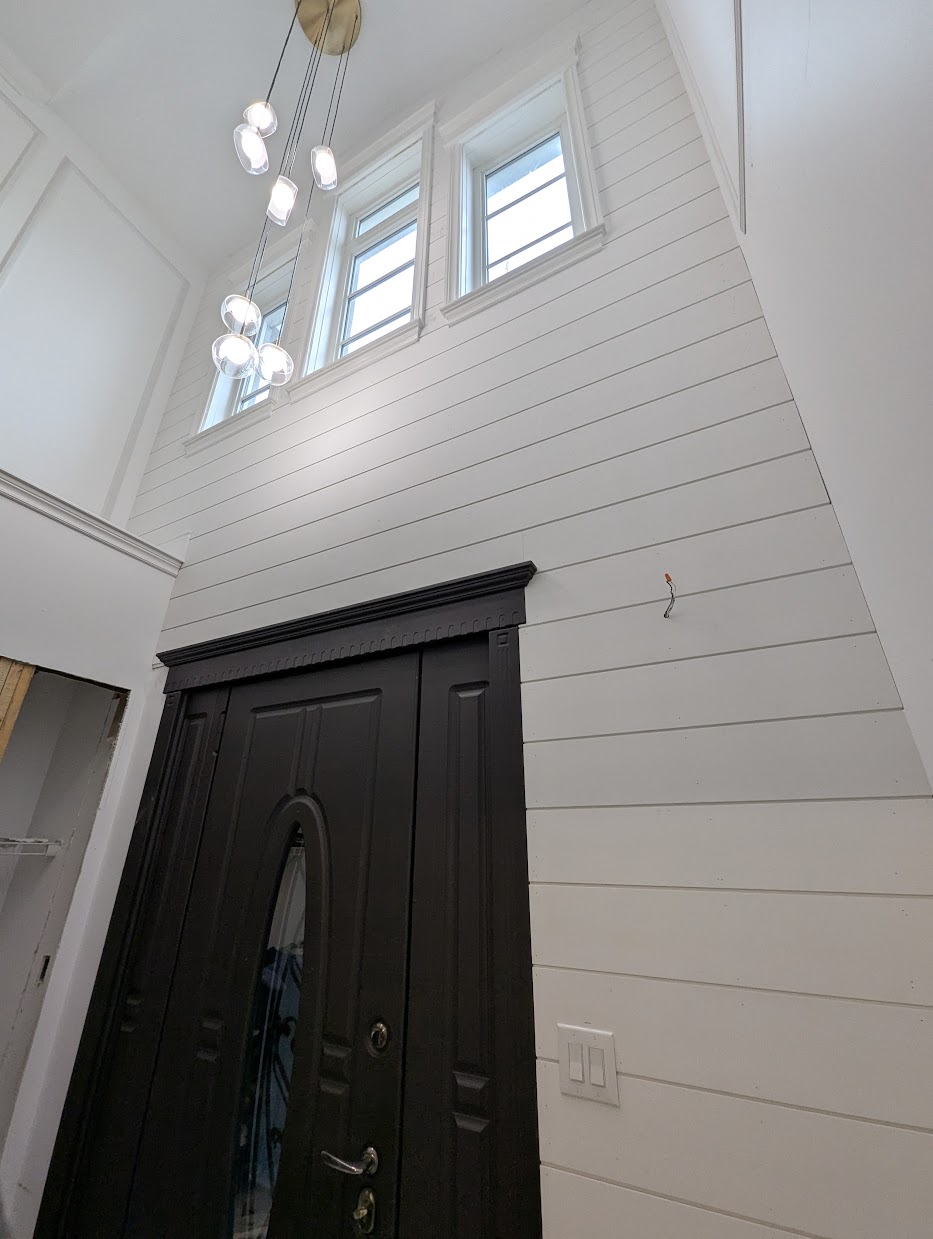
Horizontal wooden planks stacked closely together, usually with a small gap between them. Popular for coastal, farmhouse, and rustic interiors — the horizontal orientation creates a relaxed, casual feel.
Where it works best — bathrooms (gives a spa-like feel when painted in soft hues), bedrooms (relaxed and cozy, ideal for an accent wall behind the bed), and living rooms (full wall or half-wall, adds warmth and texture).
Styling tips:
- Paint white for a breezy coastal look
- Dark or natural wood finishes for a rustic or industrial vibe
- Pair with modern furniture to balance rustic with contemporary
Choosing the right wainscoting for your home
When you’re narrowing down a style, three things matter most:
- Architectural style — pick a design that complements your home’s overall character. Beadboard and shiplap suit cottage and farmhouse; raised panel and picture frame suit traditional and transitional; flat panel suits modern.
- Room function — moisture-resistant materials in bathrooms, durable styles in high-traffic areas (entryways, hallways, staircases).
- Personal aesthetic — classic elegance, modern simplicity, or something between. Wainscoting can be tailored to almost any taste.
Final thoughts
Wainscoting is a versatile feature that adds character and value to any home. The right style in the right room can transform an interior into something that feels intentionally designed rather than thrown together.
Whether you’re in Toronto, Vaughan, Markham, Richmond Hill, Ajax, Pickering, Oakville, or anywhere else in the GTA, contact us for a free in-home consultation — we’ll walk through your space, recommend a wainscoting style that fits, and quote the install with no obligation.
Related: History of wainscoting · 10 crown moulding ideas · About crown moulding installation